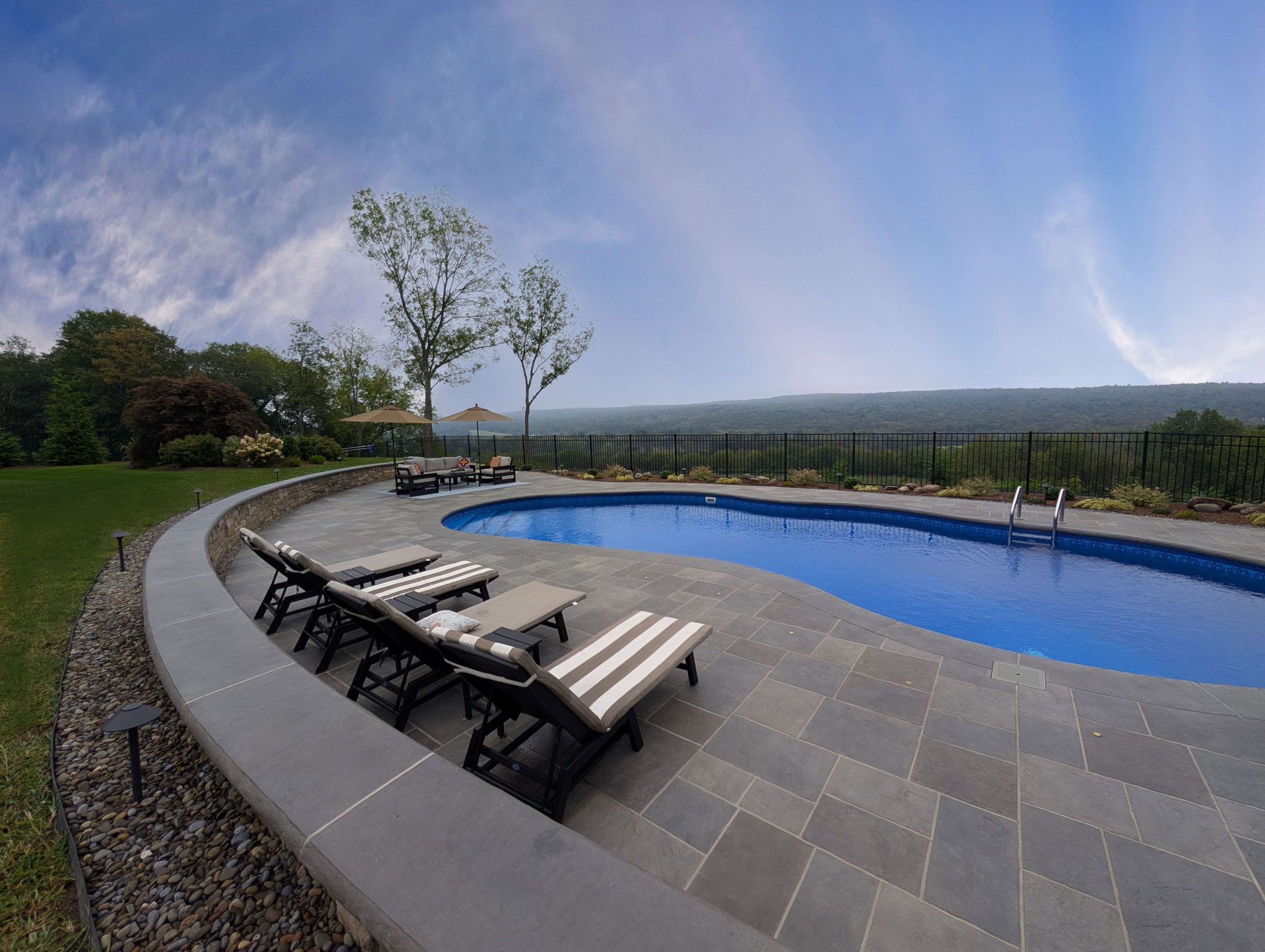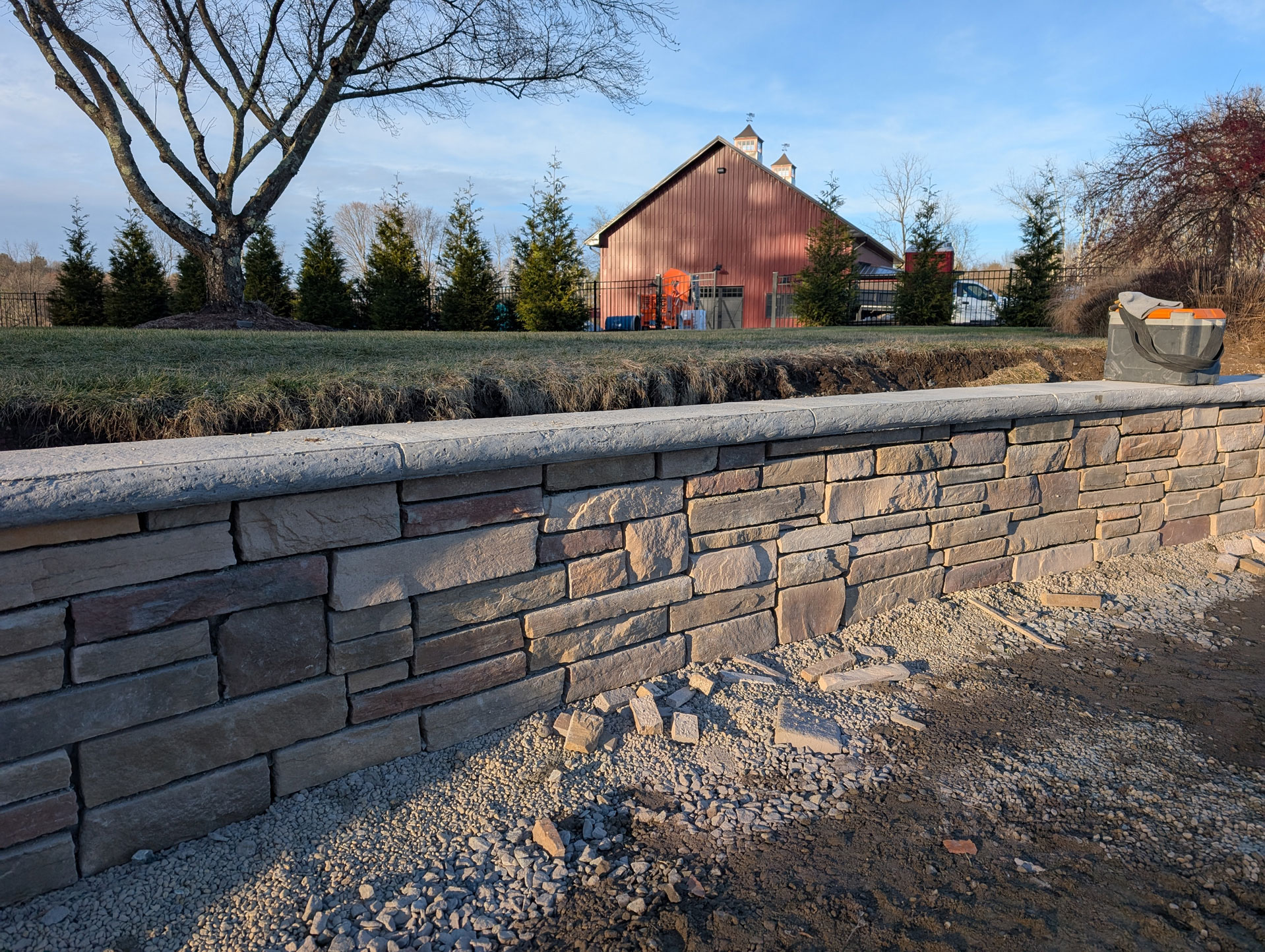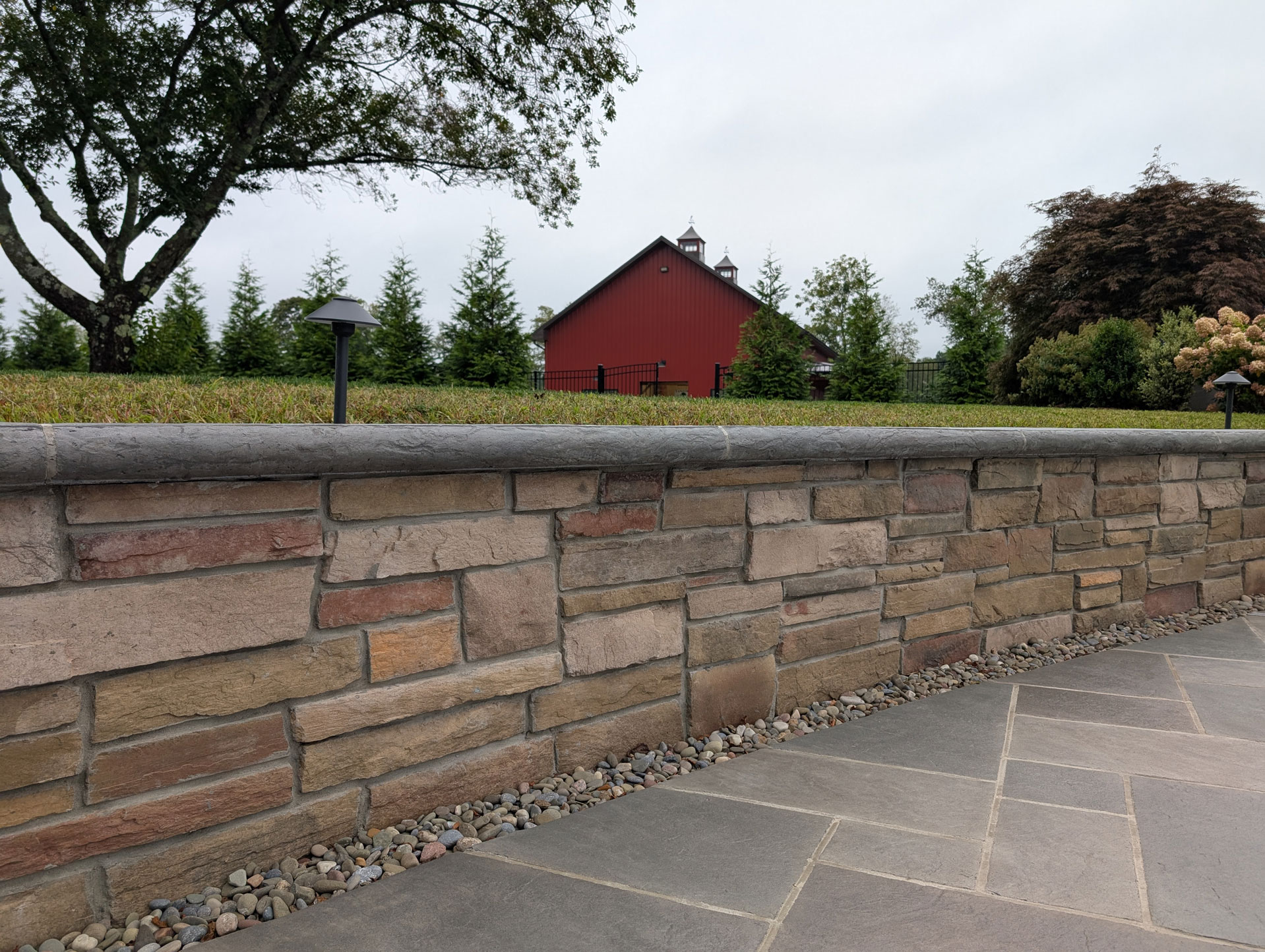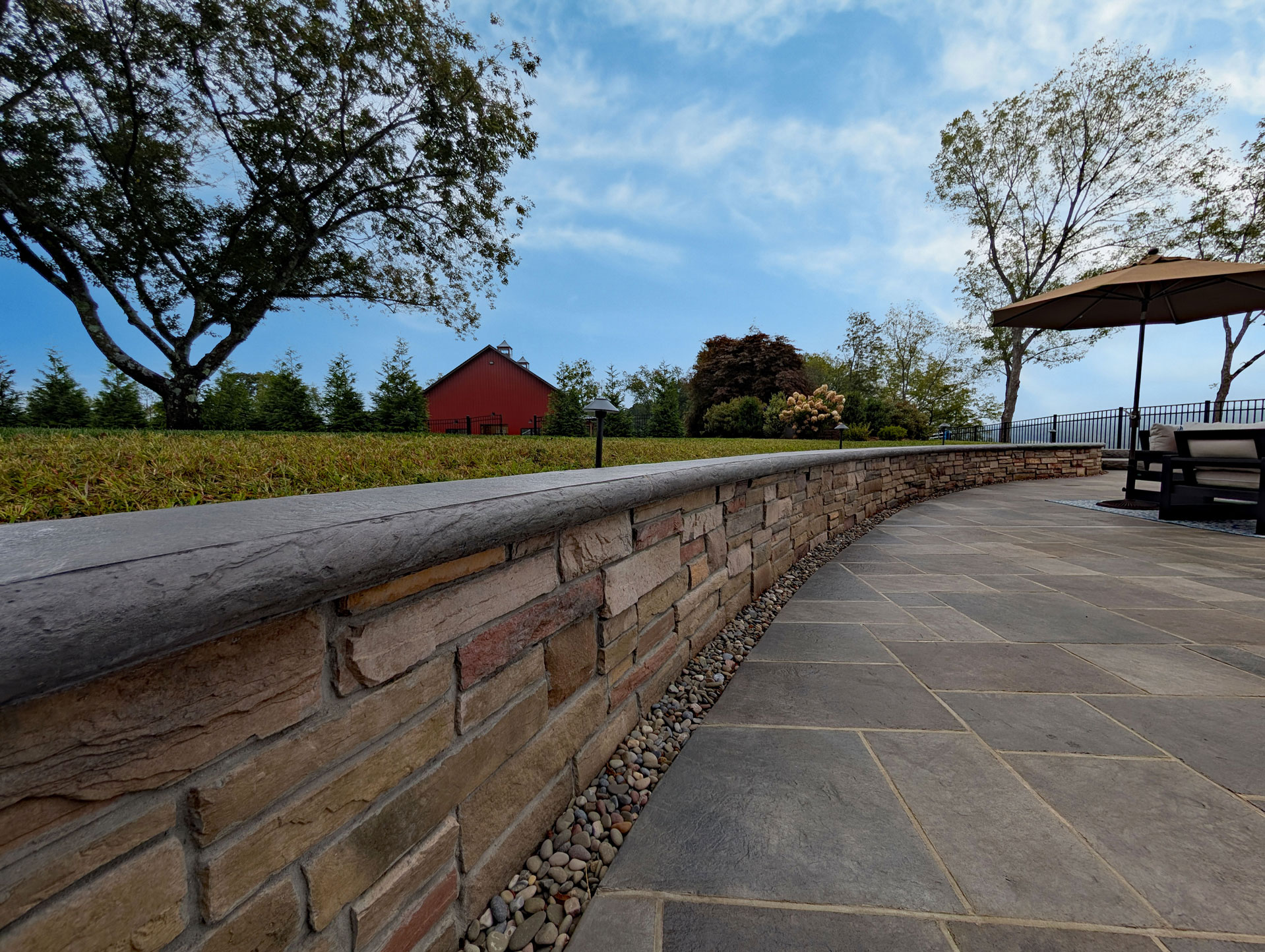
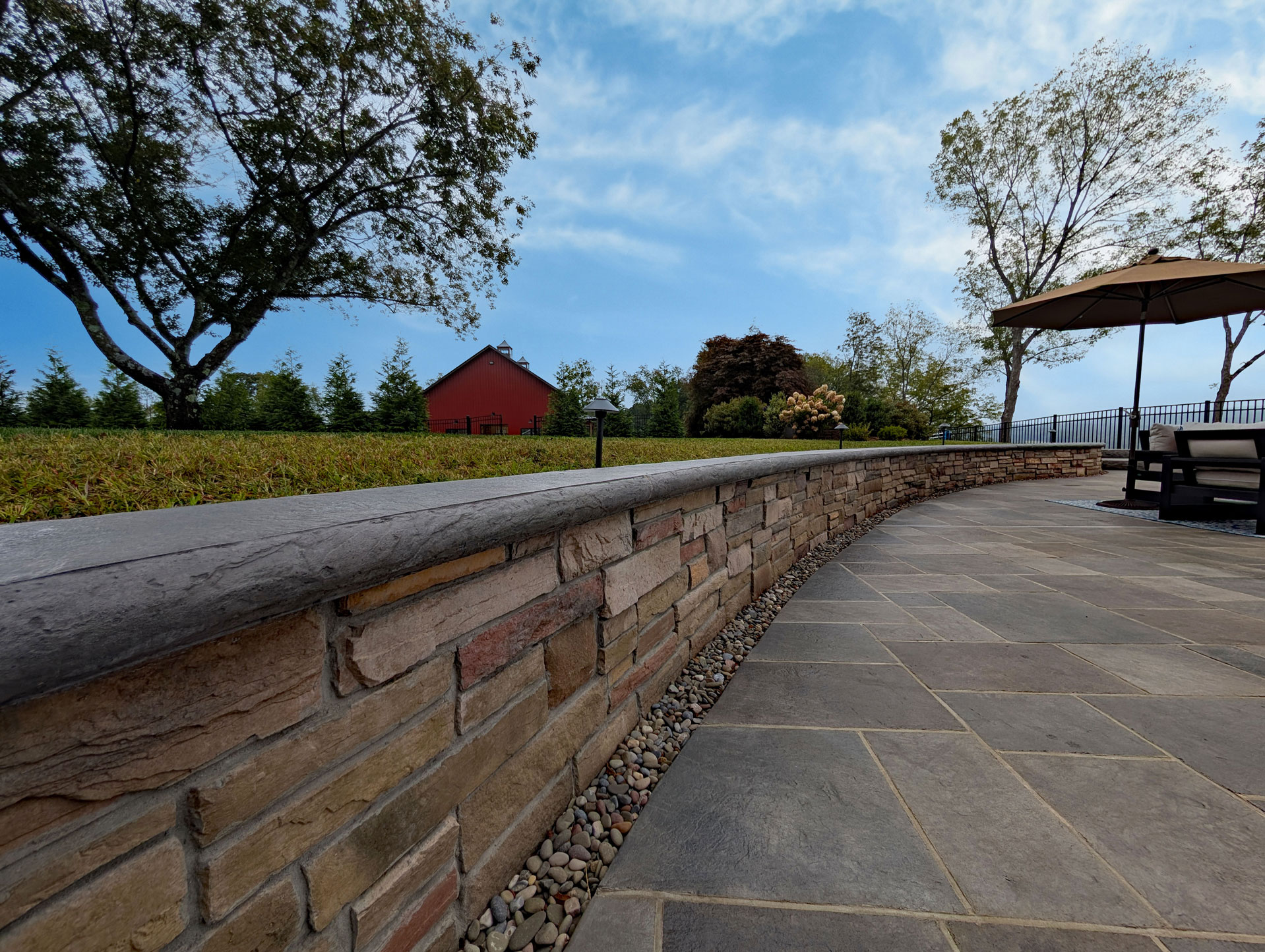
Scope of Work:
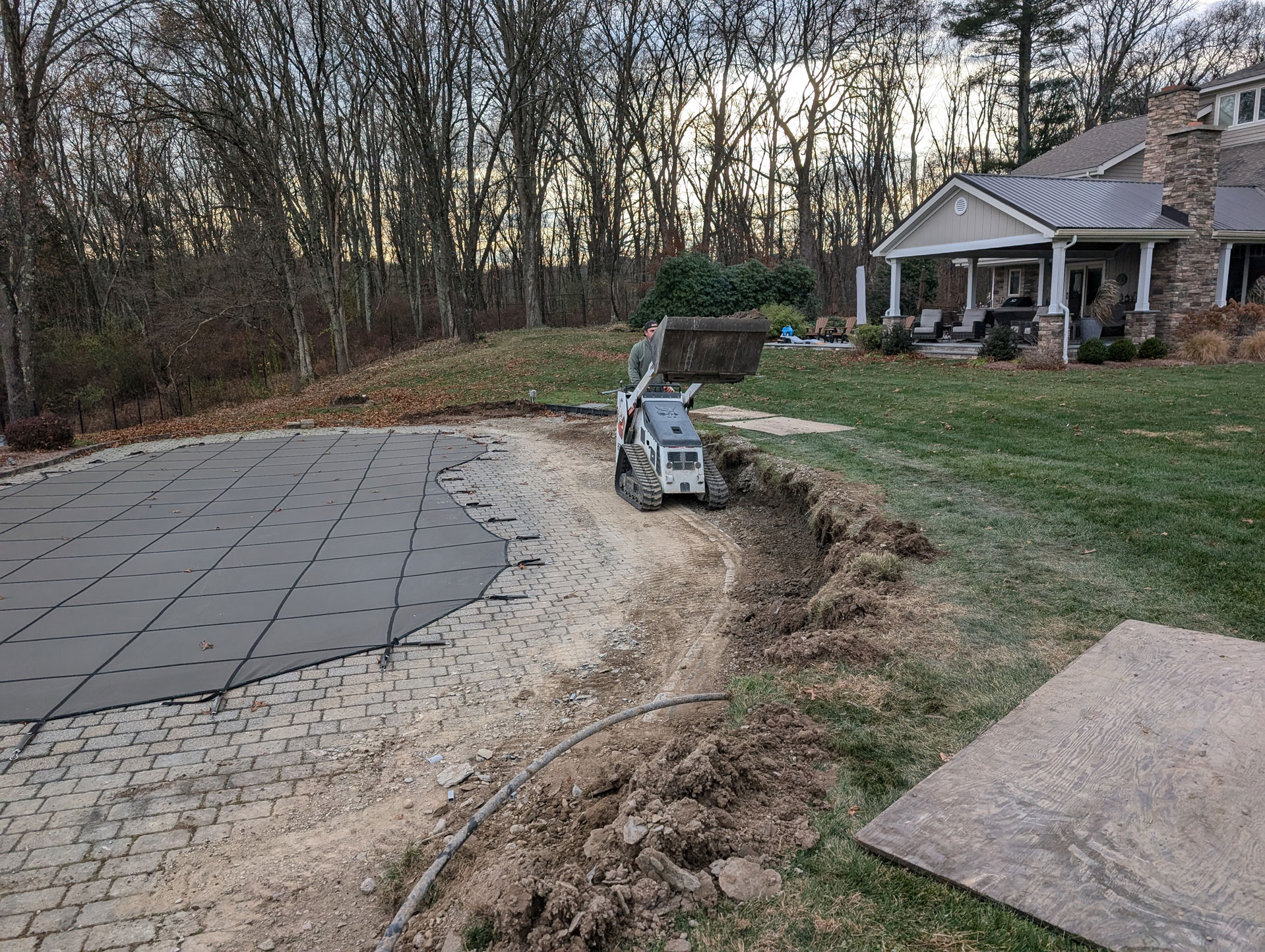
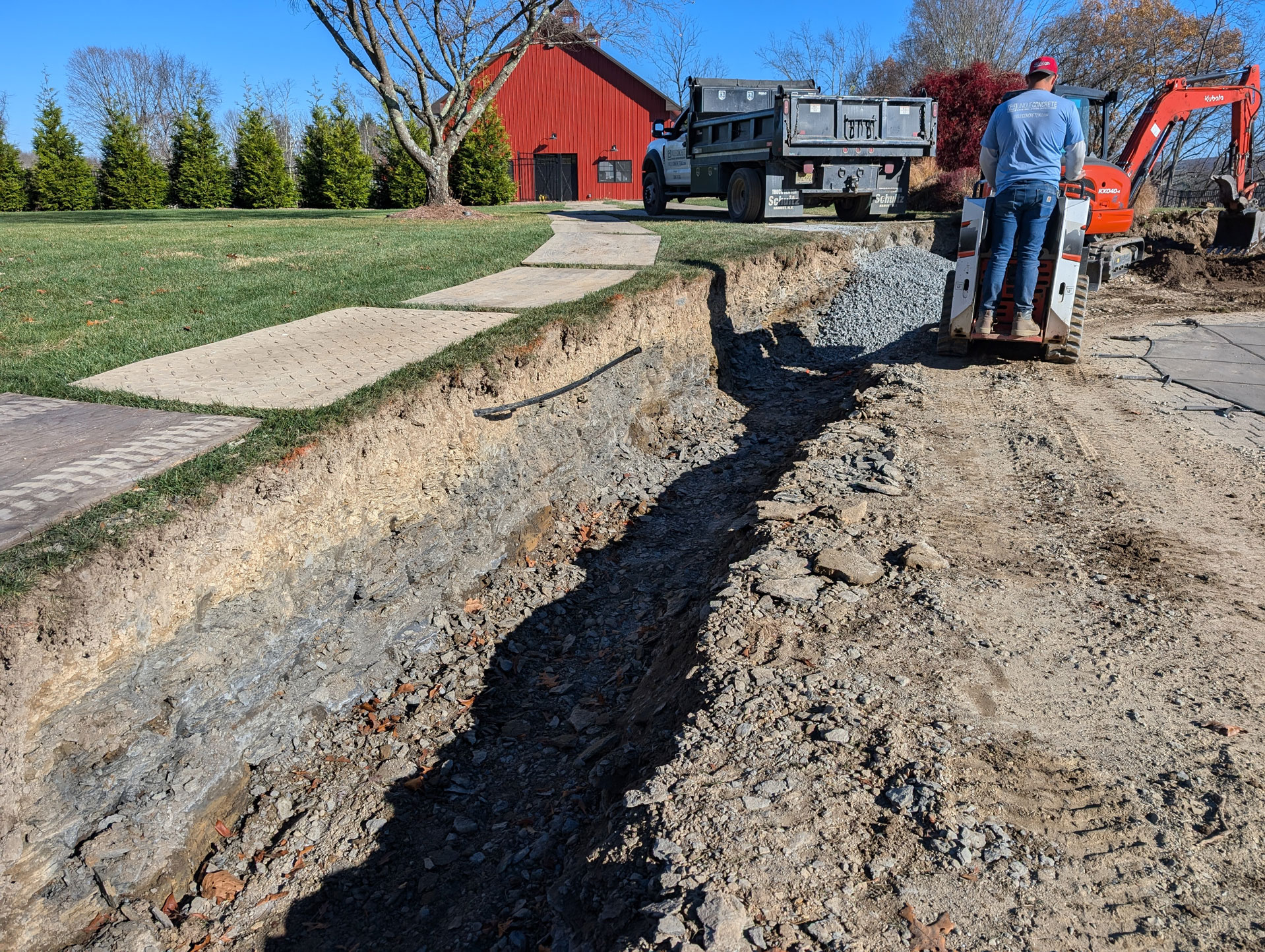
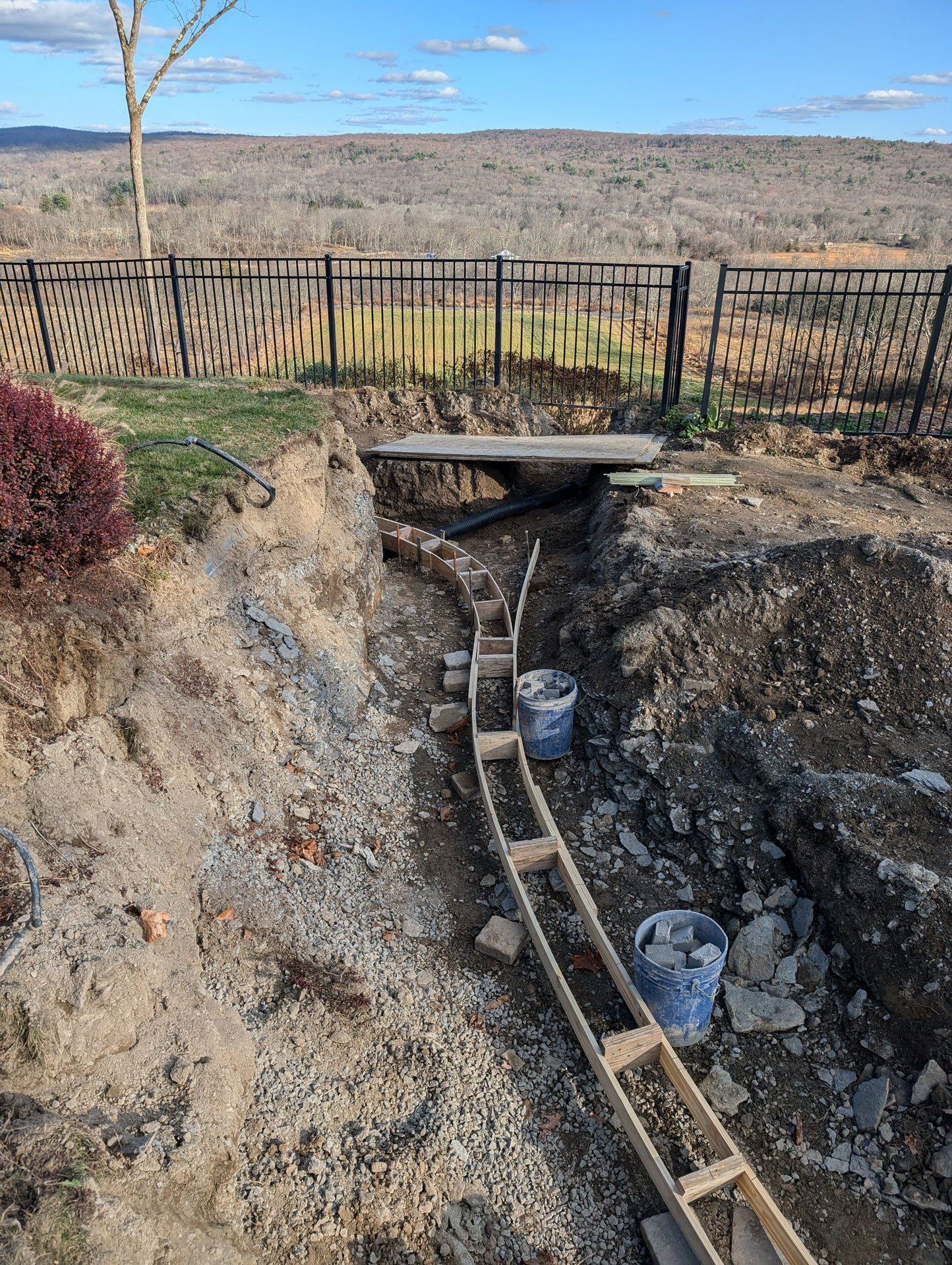
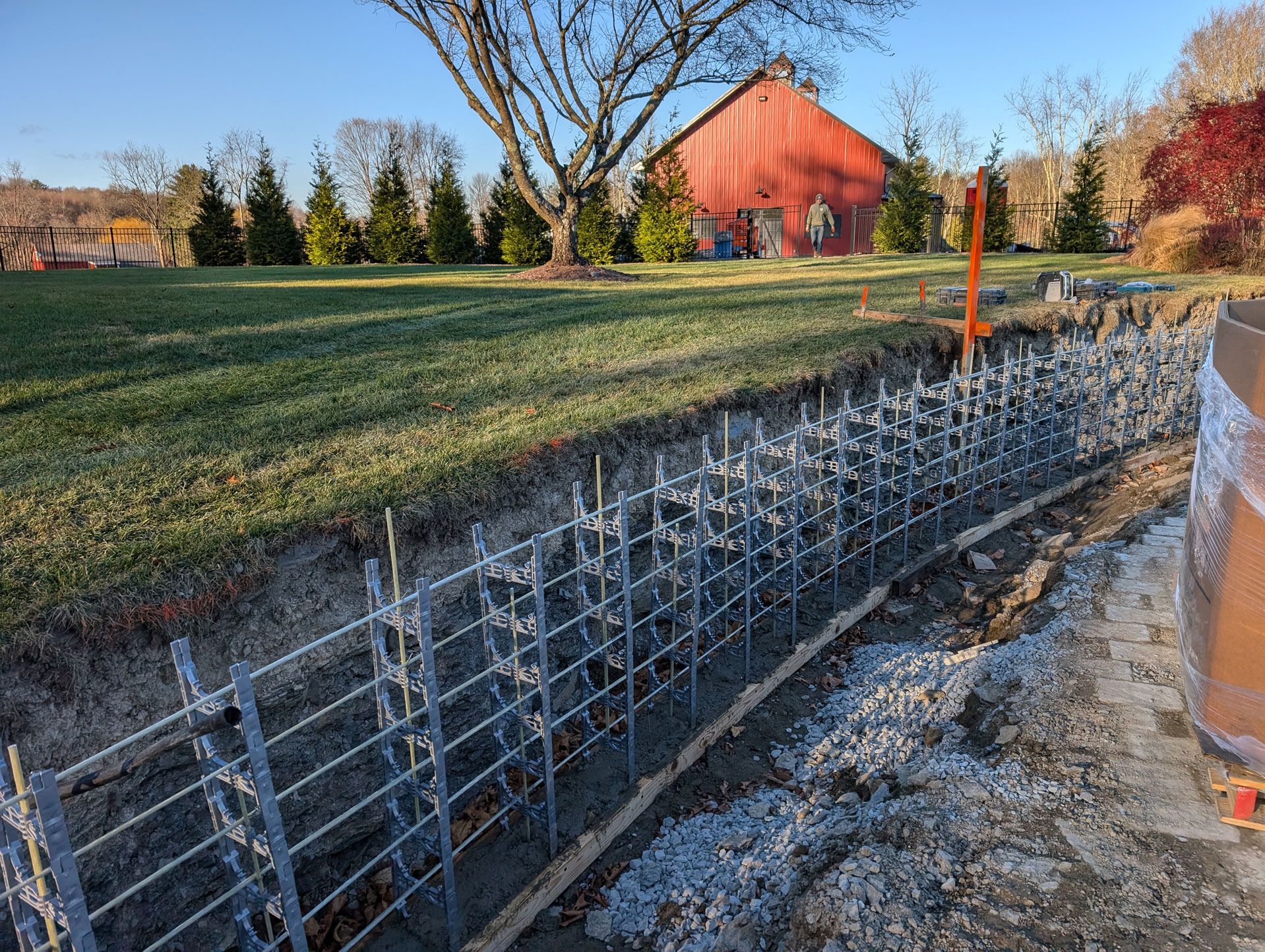
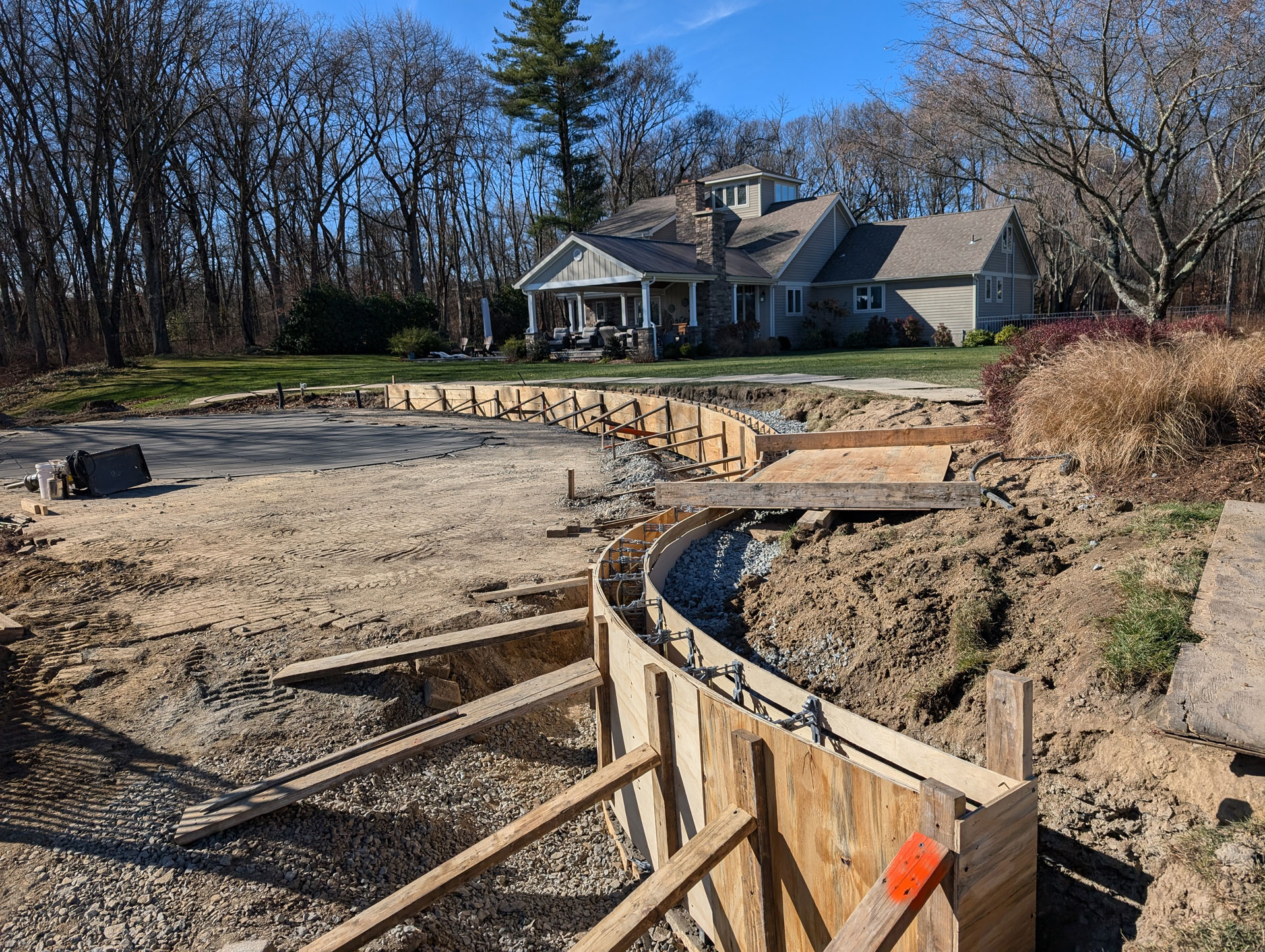
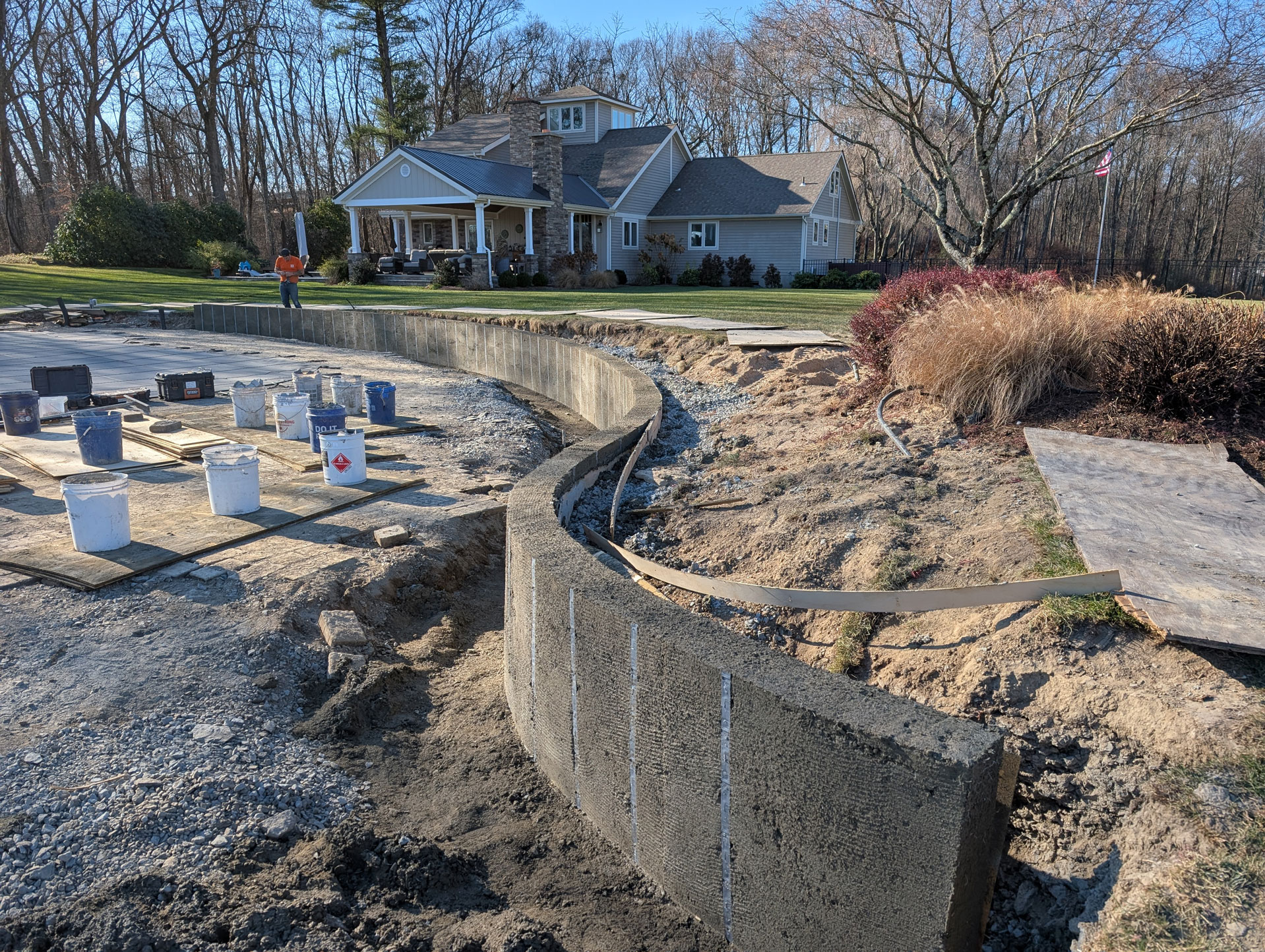
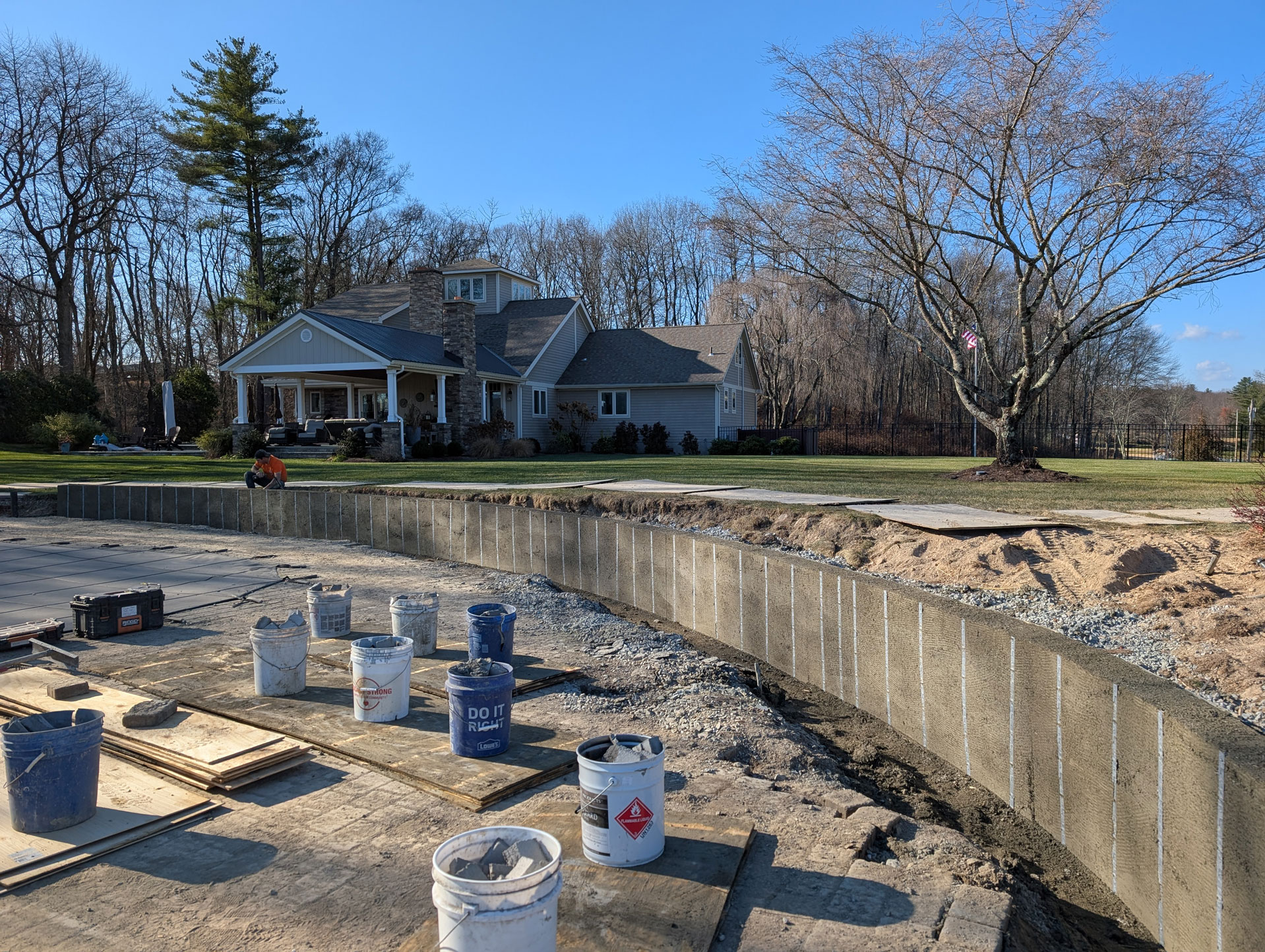
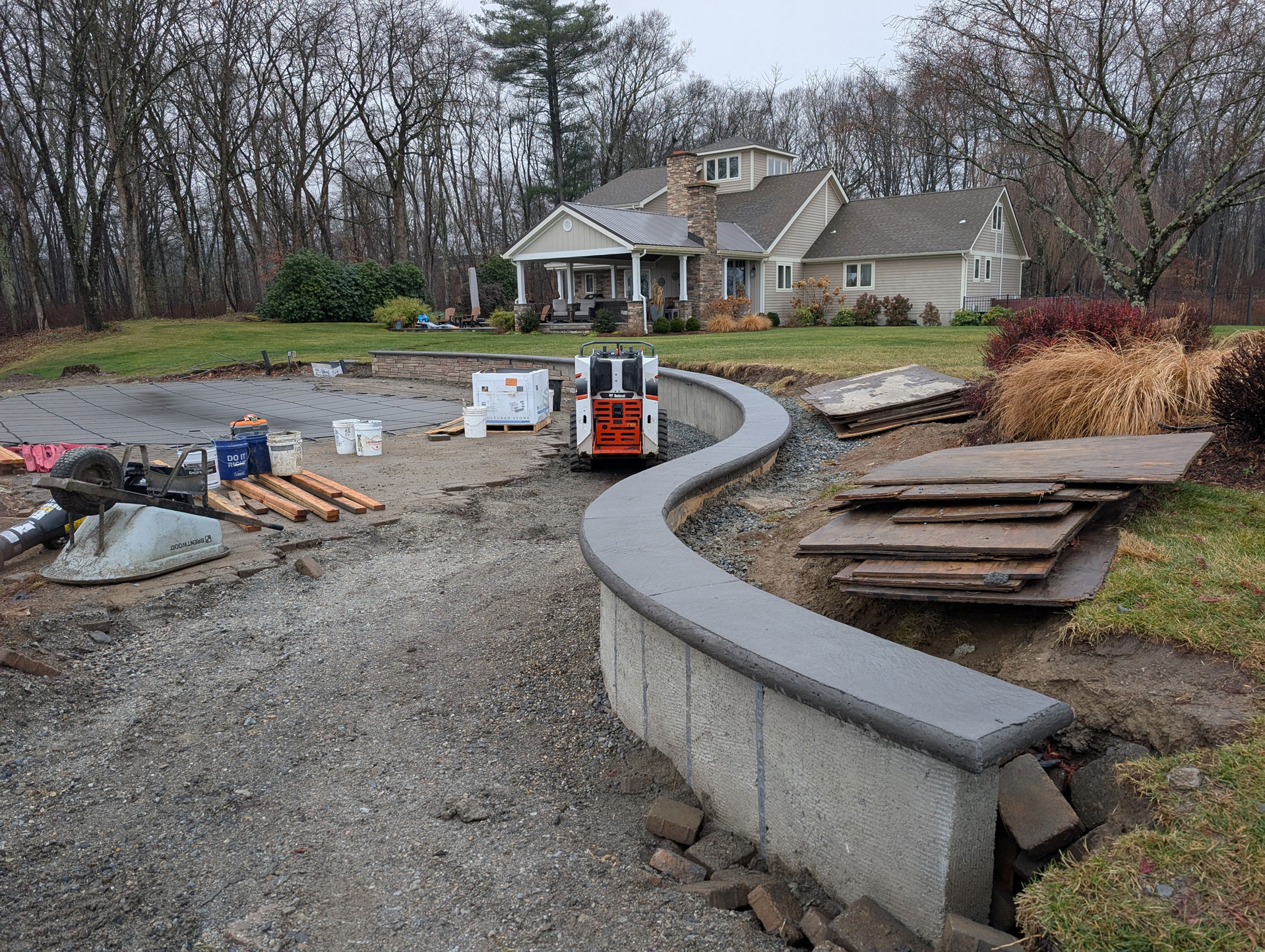
1) remove existing failing paver block retaining wall 2) excavate new foot print of wall, drainage trenches, proper depth of footing. 3) pour sub footing to shape the wall and secure base row of spider ties 4) add spider tie forming system with rebar to final height of wall 5) secure plywood to front and back of wall 6) add drainage pipe to base of back of wall 6) back fill base back of wall with clean stone 7) pour monolithic concrete wall with toe footing 8) strip plywood forms once wall can support itself and scarify the surface 9) form for cap of wall using rubber form liners 10) add cultured stone to face of wall to match existing stone on the house
Description:
This was a challenging project due to the property being meticulously landscaped and well maintained. To protect the lawn while accommodating heavy equipment, a temporary plywood road was constructed to support the removal of the existing paver block retaining wall and the excavation of approximately 40 yards of dirt and shale. The plywood road was assembled and dismantled daily to minimize disturbance to the property. Jackhammering was required to remove shale rock encountered in the path of the new wall footing.
Once demolition and excavation were complete, a sub-footing was poured to secure the base course of Spider Ties and establish the wall layout. Spider Ties were then installed to the final wall height, with fiberglass rebar incorporated into each course for reinforcement. After the ties were set, plywood forms were installed on both the front and back of the wall. To accommodate the wall’s free-flowing shape, plywood thickness varied from ¼″ to ⅜″. The plywood was held approximately 8″ above the bottom of the wall to allow concrete to flow beneath the forms, creating a monolithic toe and heel footing. Approximately 12 yards of internally fiber-reinforced structural concrete were used to pour the wall.
The plywood forms were stripped the same day the wall was poured, allowing the concrete surface to be scarified to ensure proper adhesion of the cultured stone veneer. Prior to stone installation, the wall cap was formed and poured using the same formliners planned for the pool, creating a cohesive and complementary design.
After the cap cured and forms were removed, cultured stone was applied to the wall. The stone was selected to match the existing stone on the house. Once the wall was completed, work commenced on the pool surround.
Details:
| Sq Ft: | 100 linear ft |
| Type: | Patios, Stonework, Stamped Concrete, Walls |
| Wall System: | Spider Tie System |
| Reinforcement: | Nycon XL-100, Nycon Multimesh, Gatorbar #4, #3 steel rebar |
| Cultured Stone: | Southern Ledgestone Chardonnay with ½” joint |
| Z Poolform Profile: | Bullnose Slate |
| Grout Color: | Natural grey |
| Sealer: | Kingdom Guard |